Home › Services › Asphalt Resurfacing in Columbus, Ohio
Asphalt Resurfacing in Columbus, Ohio
Resurfacing is the best value in paving when the base underneath is sound, and the fastest way to waste money when it is not. Everything below is about telling those two situations apart before anyone signs a contract.
What an Overlay Actually Is
Resurfacing means taking the top off a pavement problem, not solving it from the bottom. An overlay is a new layer of hot-mix asphalt, usually an inch and a half to two inches thick after compaction, laid over the existing surface. The old pavement stays where it is and becomes the base for the new mat. That is the whole idea, and it is also the whole risk.
Done in the right situation, an overlay is the best value in the trade. You get a new wearing surface, a new seal against water, a smooth surface to drive on and a clean canvas for striping, all for a fraction of what tearing everything out and starting over costs. Existing asphalt that is structurally intact makes an excellent base. It is already compacted, it already carries the load it has been carrying, and it has already settled into whatever shape it is going to hold.
Done in the wrong situation, an overlay is the most expensive mistake available in paving, because you pay for a full paving job and get a season or two out of it before the same cracks come back through the new surface in the same places. The material is not the problem. The mix is the same mix a new driveway gets. The decision is the problem.
The One Question That Governs Everything
Every resurfacing decision comes down to a single question: is what is underneath still structurally sound? Not smooth, not attractive, not recently patched. Sound, meaning it still carries load without flexing, and the stone and subgrade below it are stable and draining.
If the answer is yes, resurface. If the answer is no, no amount of new asphalt on top will fix it, because the new asphalt is not structure. It is two inches of flexible material lying on whatever is beneath, and it does exactly what the thing beneath it does. If the base moves, the new mat moves. If the base cracks, the new mat cracks along the same lines, usually within a season or two.
That rule has a canonical form worth memorizing before any bids come in: overlay when the base is sound, replace when it is alligator cracking. Everything else on this page is about how to tell which one you are looking at, and about the middle ground between them where most real properties actually land.
How to Read a Surface and Answer That Question
Crack pattern is the main tell. Long straight cracks running roughly parallel, down the middle of a drive, along an old construction joint, or across the width at fairly regular intervals, are thermal and surface cracking. The pavement shrank in cold weather and split. That is a surface problem and a good candidate for an overlay once the cracks are cleaned out and filled.
Interconnected cracks forming a web of small irregular pieces, the pattern everyone calls alligator or fatigue cracking, are a base problem. That web is what a surface does when it flexes under load with no support beneath it. Where you find it matters as much as that you found it. A patch of alligatoring at the apron where the delivery truck turns, or in one truck lane on a lot, is localized failure and can be cut out. The same pattern spread across large areas is systemic.
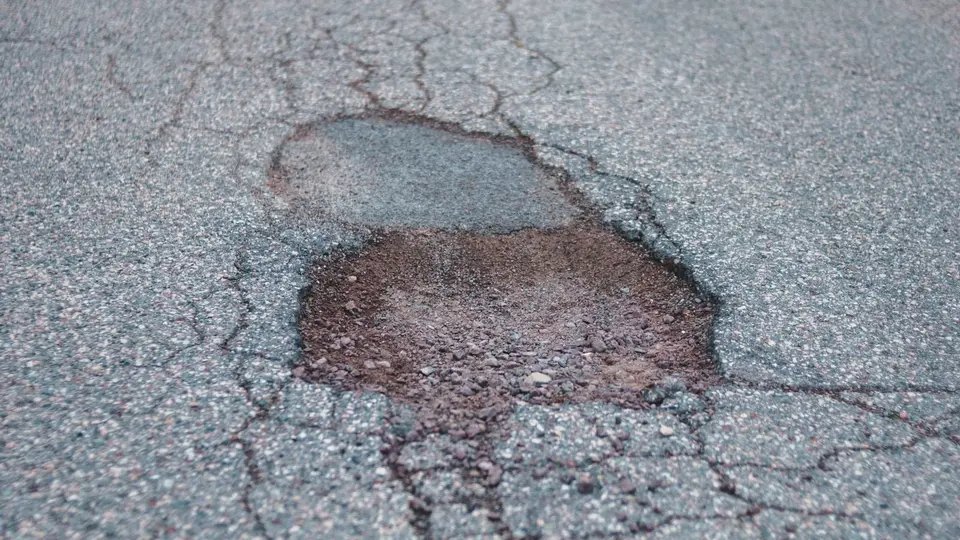
Then there are the symptoms that never show up as cracks. Walk the pavement after a rain and mark where water stands. Those low spots are settlement, and settlement means the base is moving. Watch a suspect area as a loaded vehicle rolls across it. If it visibly deflects, the support under it is gone. Look at the exposed edges, where you can usually see the actual thickness of the existing asphalt and whether there is real stone under it or just dirt. Potholes are the end state of all of this, since a pothole is a failure in the base wearing its way up through the surface.
Age is context, not a verdict. Asphalt built right lasts fifteen to twenty years, longer if it has been sealed and the cracks have been kept shut. A twelve-year-old surface that was maintained can be a perfect overlay candidate. A six-year-old surface built on four thin inches of stone over wet clay may already be past saving. In central Ohio that second scenario is common, because the subsoil here is glacial till, a heavy clay that holds water and heaves.
Milling Versus Paving Over
Once the base passes inspection, the next decision is whether to mill. Milling is grinding a controlled depth off the existing surface with a machine that leaves behind a rough, uniform, textured plane. The millings are hauled off and recycled, and the new mat goes down into the void that was just created.
Paving over, meaning laying the new mat directly on the existing surface without removing anything, is cheaper and faster. It works when the elevation can afford to rise: an open lot with plenty of fall and no fixed edges, or a driveway with room to tie in at both ends. It also buries whatever surface defects are down there, so raveling, old patches and rutting need to be addressed first rather than smoothed over and forgotten.
Milling costs more and buys two things. The first is elevation. You can take two inches off and put two inches back and finish exactly where you started, which is the only way to overlay a surface that is already tight to a garage slab, a curb line or a door threshold. The second is bond. A milled surface is rough and clean, and with a tack coat it gives the new mat far more to grip than a slick, oxidized old surface ever will. Edge milling, which cuts a tapered strip only a few feet wide at the tie-in points, is the compromise between the two, and on residential drives it is frequently the right call.
Why an Overlay Over Alligator Cracking Fails
It is worth being blunt about this failure mode, because the temptation to overlay a badly cracked surface is strong. It looks superb for about a month and it costs a fraction of what a rebuild costs, which is exactly why the cheapest bid on a failed lot is so often an overlay.
Alligator cracking means the base has failed. There is a soft, wet or too-thin section under that web, and every load that rolls over it flexes the pavement. Laying two inches of new asphalt on top adds no support whatsoever. It adds two inches of new material that now flexes along with everything under it. The cracks below keep moving, and that movement propagates upward through the new mat until it surfaces as a crack in the same position as the original. That is reflective cracking, and over a failed base it appears within a season or two, sometimes in the first winter once freeze-thaw starts working the joint open.
The second failure is usually faster and uglier than the first. The new cracks let water into a base that was already saturated, and the overlay has added dead weight to a subgrade that could not carry what it already had. A bid that includes cutting out the alligatored areas full depth and rebuilding them before the overlay goes down is not padding the number. It is the only version of the job with a chance of lasting.
Tie-Ins at the Garage, the Street and Every Fixed Edge
Adding a layer of asphalt raises the surface, and that surface has to meet things whose elevations cannot move. The garage slab is the one that catches people. Put two inches of new asphalt against a garage apron and you either build a lip at the door or you mill a taper back from the slab so the new surface arrives flush. A lip at the garage means water can pond against the door and it means shovels and plow blades catch on it every winter.
The street end is the same problem in reverse. A driveway apron has to meet the existing edge of pavement at grade. Raise it two inches and you have created a bump at the bottom of the drive that low cars scrape on and water sits behind. The remedy is the same: mill a taper at the apron so the new surface feathers down and meets the existing elevation cleanly.
Every other fixed edge deserves the same look. Sidewalks that cross the drive, curbs, thresholds at a walk-out door, patio slabs, gate posts, garden edging, and the top of any drain grate or cleanout. On a parking lot, catch basin castings often have to be reset to the new elevation and the concrete ring around each one rebuilt, or the basin ends up sitting in a dish that collects everything. A resurfacing bid that never mentions tie-ins is a bid where nobody has thought about them yet.
What Two Inches Does to Drainage
An overlay does not only raise the surface, it changes where water goes. Two inches laid over an area with an existing low spot generally reproduces that low spot, because the paver follows the surface it is riding on unless the crew deliberately builds the low areas up first with a leveling course. If you want the birdbath gone, that has to be in the scope in writing.
The relationship to the surrounding grade changes too. A driveway that used to sit flush with the lawn now sits two inches proud, which is usually an improvement because it sheds water off the side. But a drive that used to drain sideways into a swale can end up dammed by its own new edge if the grade was already marginal. On the uphill side, a raised edge can block water that used to run across the pavement and push it somewhere new, often toward a foundation, which is the outcome nobody wants and the one nobody notices until the first hard rain.
This is a conversation to have before the work, not after. The fixes are ordinary: a leveling course through the low areas, a milled edge on the sides where water needs to leave, regrading the shoulder against the new edge, adding a drain where water now collects. All of them are inexpensive while the equipment is on site and expensive once it has gone. In central Ohio the stakes are higher than they look, because glacial till holds trapped water instead of letting it drain away, and every winter puts that water through dozens of crossings of 32 degrees.
When a Mill-and-Fill Is the Right Middle Answer
Between a plain overlay and a full rebuild sits a middle answer that gets used constantly and explained rarely. Mill and fill means grinding off the top layer, commonly an inch and a half to two inches, hauling it away, and laying a new layer of the same thickness in its place. The base and any lower asphalt layers stay exactly where they are, and the finished elevation matches what was there before.
It is the right call when the wearing surface is worn out but the structure beneath it is fine: heavy raveling, deep oxidation, rutting in the wheel paths, or a surface that has been patched so many times it reads as a quilt. It is also the right call any time elevation simply cannot move, such as a lot with curbs and basin castings set at fixed heights, or a drive already tight to the garage and the street at both ends.
On a larger property the best plan is frequently not one answer applied everywhere. Full-depth removal and rebuild where the base has failed, mill and fill across the areas that are worn but structurally sound, crack fill and patching to carry the remainder a few more seasons. That is a normal scope rather than a compromise, and it is what tends to get proposed by someone who actually walked the property instead of measuring it on a screen.
The Honest Case for Full Replacement
Sometimes the truthful answer is that resurfacing would be throwing good money after bad. Full-depth replacement means removing all of the existing asphalt, inspecting and repairing the stone base, undercutting and replacing bad subgrade wherever it turns up, regrading for drainage, and then paving new. On a driveway that is six to eight inches of compacted aggregate under two to three inches of asphalt. On a parking lot it is eight inches or more of aggregate with a thicker binder course where trucks turn.
The case for replacement is straightforward. If the base has failed broadly rather than in patches, replacement is the only real fix. If the surface has already been overlaid once or twice and is now four or five inches of stacked asphalt sitting on a thin base, stacking more on top is not a plan. If the drainage is genuinely wrong, with the pavement pitched toward the house or no fall at all across a section, replacement is the only opportunity to correct the grade, because an overlay locks the existing shape in place for another twenty years. And where pavement is simply old and has never been maintained, the arithmetic often favors doing it once, properly.
Replacement costs considerably more and takes longer, so it is fair to be skeptical of anyone who recommends it without walking the property and explaining what they saw. It is equally fair to be skeptical of a cheap overlay bid on a surface that is visibly alligatored, because a bid like that is priced to win the job and not to last through it. Ask for the scope written out by area instead of as one lump sum, ask what happens if something gets damaged, ask to see the company's paperwork, and ask what specifically made them choose an overlay here rather than a rebuild.
Timing, Curing and Getting a Number
Resurfacing runs on the same calendar as any paving in central Ohio: roughly April through October, with the mat needing ground above 50 degrees and rising. Hot mix is a temperature-dependent material. It has to be placed and compacted while it is still hot enough to move, and cold ground pulls that heat out quickly. Late-season work is possible, but the usable window inside each day shrinks, and a rushed cold-weather mat never compacts the way a June mat does.
After the work, passenger cars can generally get back on in a day or two. Stay off the edges, which have no confinement and will crumble under a tire that runs off the side, and keep point loads such as trailer jacks, motorcycle stands and equipment legs off the new surface for a few weeks while it cures. Do not sealcoat a fresh overlay right away either. New asphalt needs a season to give up its surface oils before a seal will bond properly, and sealing too early traps them.
The number depends on square footage, on how much milling the job needs, on how much repair has to happen before any overlay goes down, on tie-in work at the edges, and on access for the equipment. It gets priced by a local paving company after somebody stands on the pavement and looks at it, never by this site, and quotes are free. Call (614) 618-4912 or use the quote form with the size of the area and a description of what the surface is doing, and someone will come out and give you a straight read on whether it wants an overlay, a mill and fill, or a rebuild.
FAQ: Asphalt Resurfacing in Columbus, Ohio
How long does an asphalt overlay last?Over a sound base and with maintenance, an overlay behaves much like new pavement and can run well over a decade before it needs surface work again. Asphalt built right lasts fifteen to twenty years, longer when it is sealed and the cracks are kept shut. Over a failed base, the same overlay can be cracking again within a season or two, which is why the condition underneath matters far more than the thickness on top.
Can you pave over a cracked driveway?It depends entirely on the crack pattern. Long straight cracks are thermal and surface cracking, and once they are cleaned and filled, an overlay is a reasonable answer. An interconnected web of small pieces is alligator cracking, which means the base has failed, and paving over it just reproduces the same pattern in the new surface. The usual fix in that case is cutting out the failed areas full depth and rebuilding them before any overlay goes down.
What is the difference between resurfacing and sealcoating?Resurfacing is structural work on the wearing surface. It adds an inch and a half to two inches of new hot-mix asphalt. Sealcoating is a thin protective coating that shields the surface from water, sun and oxidation. A seal will not fill a crack, will not fix a low spot and will not add strength. If the pavement is worn out rather than just faded, sealing it is cosmetic and the money would be better spent on the surface itself.
Do you have to mill before overlaying?Not always. Paving directly over the existing surface is cheaper and works where the elevation has room to rise. Milling is required when elevation cannot move, such as a driveway already tight to the garage slab or a lot with curbs and basin castings at fixed heights. Milling also creates a rough, clean surface that bonds much better to the new mat. Edge milling, which takes a tapered strip only at the tie-in points, is often the middle ground on residential drives.
Will an overlay raise my driveway at the garage?Yes, unless it is handled. Two inches of new asphalt against a garage apron creates a lip at the door, which lets water pond there and catches shovels and plow blades all winter. The fix is to mill a taper back from the slab so the new surface arrives flush. The same applies at the street, where an apron that sits two inches proud of the existing pavement becomes a bump cars scrape on.
How thick is a resurfacing layer?Commonly an inch and a half to two inches after compaction on a driveway or a car-traffic area. Heavier commercial areas may take more, particularly in truck lanes. Thickness alone is not a substitute for structure, though. A thicker overlay over a failing base fails the same way a thin one does, just slightly later, so thickness is a decision about wear and load rather than a repair strategy.
How can I tell whether my base has failed?Look for the web pattern of alligator cracking, watch for areas that visibly flex when a loaded vehicle rolls across them, and mark where water stands after a rain, since standing water means settlement. Potholes are the end state and a clear answer on their own. Checking the exposed thickness at an edge helps too, because it shows whether there is real stone underneath or the asphalt was laid more or less on dirt.
Is resurfacing cheaper than full replacement?Considerably, because the existing pavement stays in place and becomes the base, so there is no demolition, no hauling and no base rebuild. That is only a saving when the base is sound. Over a failed base, an overlay is the most expensive option available once you count paying for it twice. Pricing comes from a local paving company after a site visit, and quotes are free.
When can I drive on a new overlay?Generally a day or two for passenger cars. Keep off the edges, which have nothing confining them and will break away under a tire that runs off the side, and keep point loads such as trailer jacks and equipment stands off the surface for a few weeks while it cures. Turning the wheels of a parked car while it sits still on a hot new surface can scuff it, so roll the vehicle slightly as you steer.
Can resurfacing be done in the fall?Into October, usually. Central Ohio's paving season runs roughly April through October and the mat needs ground above 50 degrees and rising. As the season cools the usable part of each day shrinks, since hot mix has to be placed and compacted before it loses its working heat, and cold ground pulls that heat away fast. If the calendar is getting tight, crack filling now and paving in spring is often the better decision.
Get a free quote on your driveway or lot
Call and describe the property, or send an email with the address and roughly what you are looking at. The request goes to a paving company working in Columbus and central Ohio. Quotes are free and the paving company prices the job after seeing it.